At a glance
The East Village recorded 192 condo and co-op sales in the 12 months to September 2026, at a median price of $862,500, according to New York City Department of Finance records.
- Median price
- $862,500, down 2% on the year before
- Condo or co-op
- Condos $1,400,000, co-ops $657,500 (medians)
- Mix of sales
- 44% condo, 56% co-op
- Sales, 12 months
- 192, up 31% on the year before
- Most-traded building
- Christodora House, 13 sales in two years
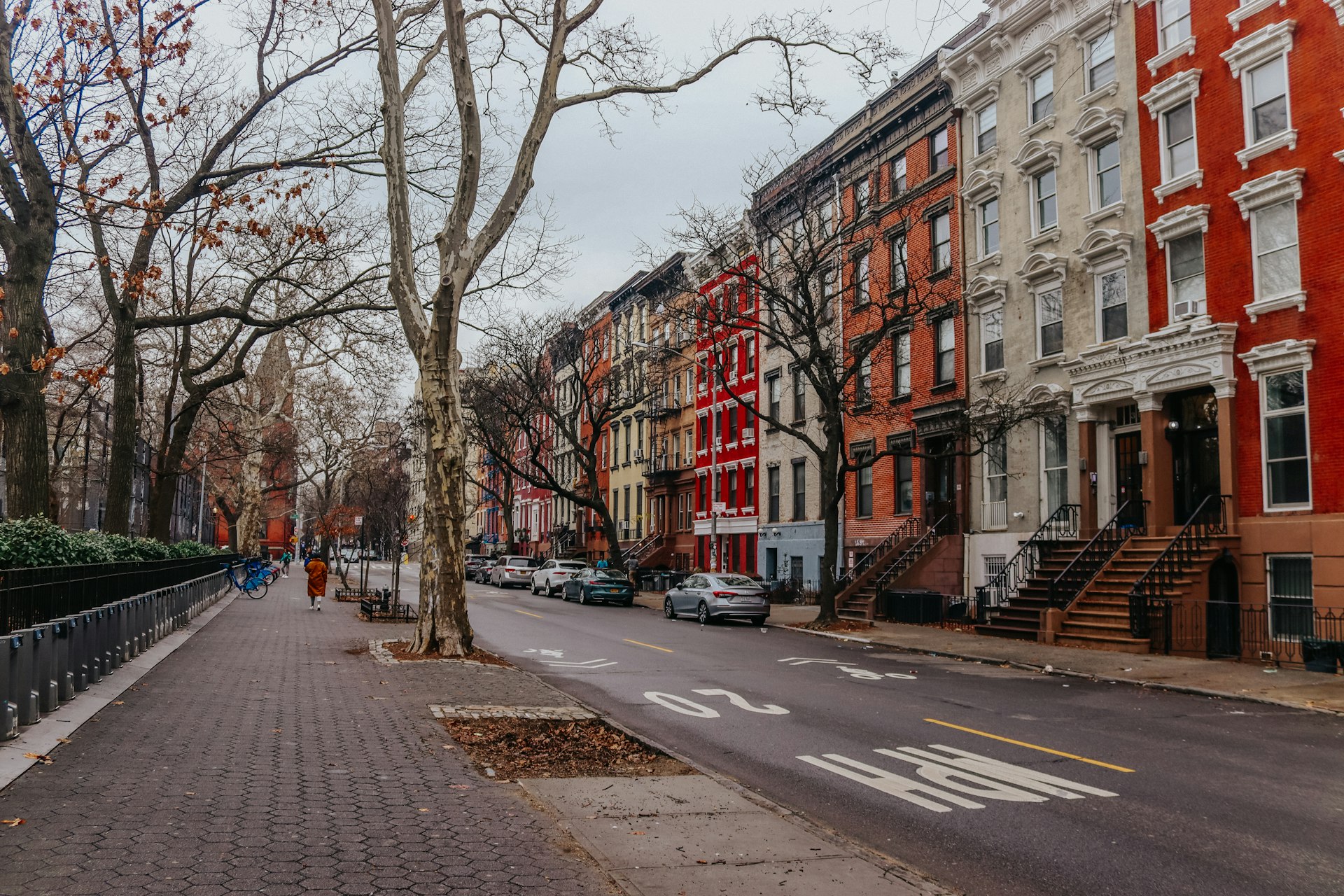
The East Village is downtown Manhattan at street level. Where neighborhoods to the west trade on cast-iron lofts or Federal-era rowhouses, the East Village is defined by the tenement block: five- and six-story walk-ups with fire escapes on the facade, storefronts at the base, and an unbroken run of small shops, restaurants, and community gardens down every avenue. It is dense, textured, and lived-in, and much of its architecture has survived precisely because it was never glamorous enough to tear down.
For buyers, the East Village rewards close reading. The housing stock is more varied than its reputation suggests, from walk-up co-ops and converted tenements to prewar elevator buildings and a newer layer of boutique condominiums. Value can shift sharply from one block to the next, and from one building to the one beside it, depending on light, layout, elevator access, building finances, and how close an address sits to the busiest corridors. This guide explains how the market works, from a team active in it.
East Village sales and prices
City records show 192 apartment sales in the East Village in the 12 months to September 2026, at a median price of $862,500. The number of sales was up 31% on the year before, and the median price down 2%. Condominiums sold at a median of $1,400,000 and co-ops at $657,500.
- 192
- Sales, 12 months
- $863K
- Median price
- $1.4M
- Condo median
- $658K
- Co-op median
| Year | Sales | Median price |
|---|---|---|
| 2026 to September | 148 | $890,000 |
| 2025 | 153 | $875,000 |
| 2024 | 165 | $897,000 |
| 2023 | 158 | $870,000 |
| 2022 | 289 | $930,000 |
| 2021 | 298 | $979,000 |
Source: NYC Department of Finance recorded sales for the city's East Village and Alphabet City sales areas. Condominium and co-op apartment sales only; whole townhouses are not included. Updated weekly as the city publishes new records.
The most active buildings in the East Village
Ranked by recorded apartment sales over the latest 24 months on record.
- 1
 Christodora HouseCondominium13 sales$1.07M median
- 2
 636 East 14th StreetCo-op10 sales$468K median
- 3
 170 Second AvenueCo-op8 sales$1.33M median
- 4
 The JeffersonCondominium6 sales$1.71M median
- 5
 123 Third AvenueCondominium6 sales$1.57M median
- 6
 141 East 3rd StreetCo-op6 sales$905K median
- 7226 East 12th StreetCo-op6 sales$442K median
- 8438 East 12th StreetCondominium5 sales$2.65M median
- 9240 East 10th StreetCondominium5 sales$1.8M median
- 10407 East 12th StreetCondominium5 sales$1.75M median
- 11421 East 13th StreetCondominium5 sales$1.59M median
- 1224 East 7th StreetCo-op5 sales$1.3M median
Where the East Village is
The East Village runs roughly from Houston Street north to 14th Street, and from the Bowery and Third Avenue east to the East River. The eastern portion, where the avenues take letters instead of numbers, is known as Alphabet City, running along Avenues A, B, C, and D. To the west are NoHo and Greenwich Village, to the south across Houston Street is the Lower East Side, and to the north across 14th Street are Gramercy and Stuyvesant Town.
Astor Place and Cooper Square mark the western gateway, St. Marks Place runs east from Third Avenue toward Tompkins Square Park, and the blocks grow quieter and more residential moving east. Like most Manhattan neighborhood lines, the edges are loosely held, particularly where the East Village meets NoHo and the Lower East Side.
The East Village's character: tenements, gardens, and street life
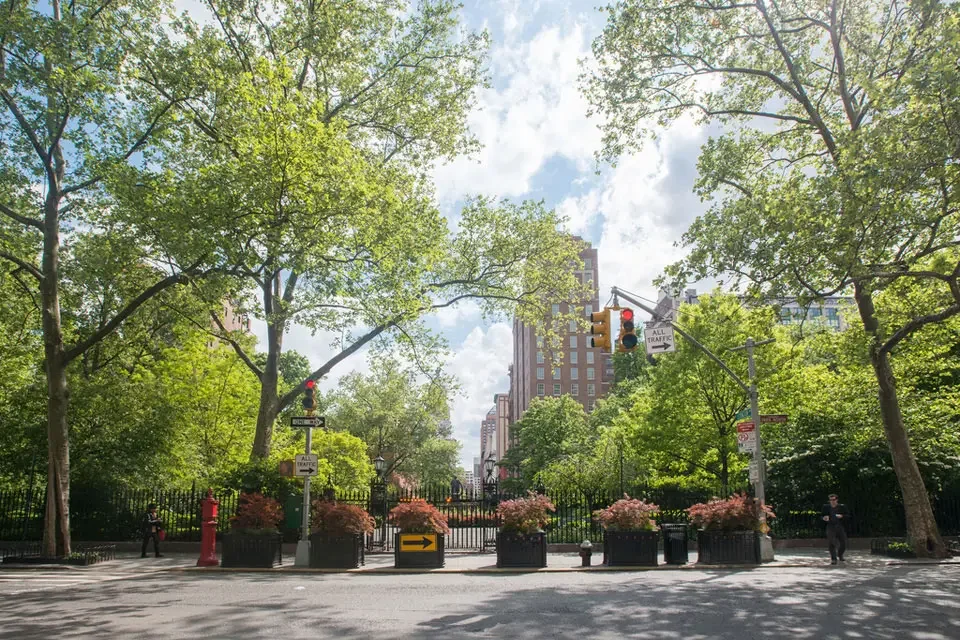
Two things define the East Village. First, the streetscape. Block after block of tenements and walk-ups gives the neighborhood a consistent low-rise scale, with storefronts on nearly every corner and side streets lined with trees. Tompkins Square Park sits at its heart, a large, tree-filled square between Avenues A and B, and Alphabet City is dotted with community gardens tucked between buildings. St. Marks Place and the surrounding avenues carry much of the neighborhood's energy, while blocks only a short walk away can feel calm.
Second, history. The East Village/Lower East Side Historic District protects a significant stretch of tenement and rowhouse architecture, and landmarks such as the Cooper Union Foundation Building near Astor Place anchor the western edge. The result is a neighborhood whose character is unusually durable: protected facades, small lots, and a scale that has kept large towers to the margins.
East Village housing stock: walk-ups, prewar co-ops, and boutique condos
The East Village offers more range than most downtown neighborhoods, at more entry points.
- Tenement and walk-up co-ops. The classic East Village home is an apartment in a converted tenement or walk-up, often a co-op, with exposed brick, original details, and modest floor plans. Some buildings have combined units into larger layouts.
- Prewar elevator buildings. A smaller set of prewar co-ops and condominiums offers elevators, larger rooms, and more traditional layouts, and these tend to be in steady demand.
- Boutique condominiums. Newer buildings, many small in scale, have added condos with modern kitchens, outdoor space, and elevator access, often on the avenues or along the Bowery.
- Rowhouses and townhouses. Scattered through the side streets, some single-residence and many divided into apartments, these rarely come to market.
- HDFC co-ops. The neighborhood has a number of HDFC co-operatives, which carry income limits and other restrictions on purchase and resale. They are a distinct category with their own rules and should be understood fully before making an offer.
If you want character, brick and detail, and a building with only a handful of neighbors, the East Village is one of the deepest markets in Manhattan for it.
Why buyers choose the East Village
- Architecture and scale. Low-rise tenement blocks and landmarked rowhouses give the neighborhood a texture that newer districts cannot replicate.
- Parks and gardens. Tompkins Square Park, the community gardens of Alphabet City, and the East River waterfront along the eastern edge add green space to a dense grid.
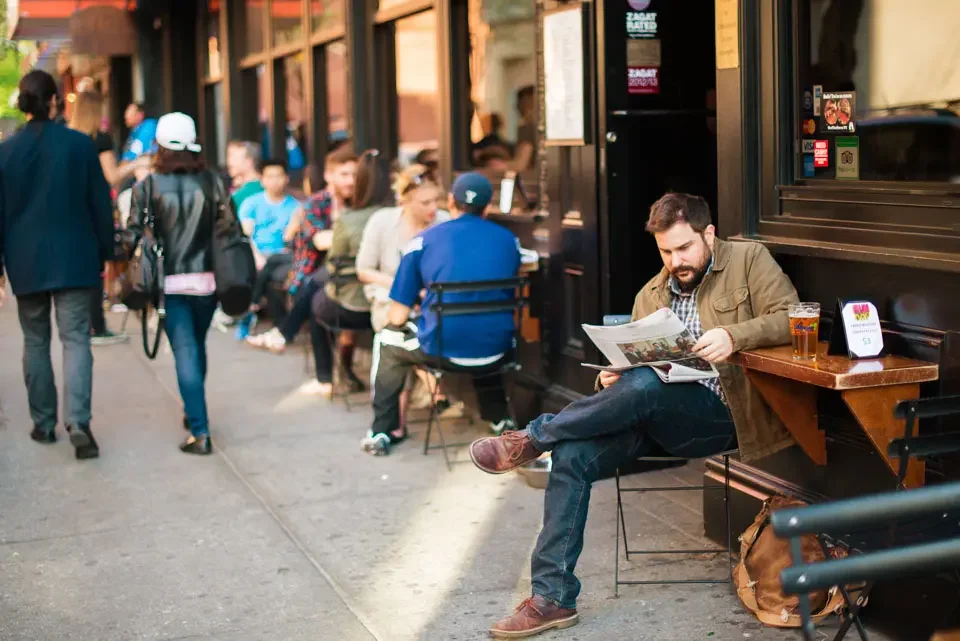
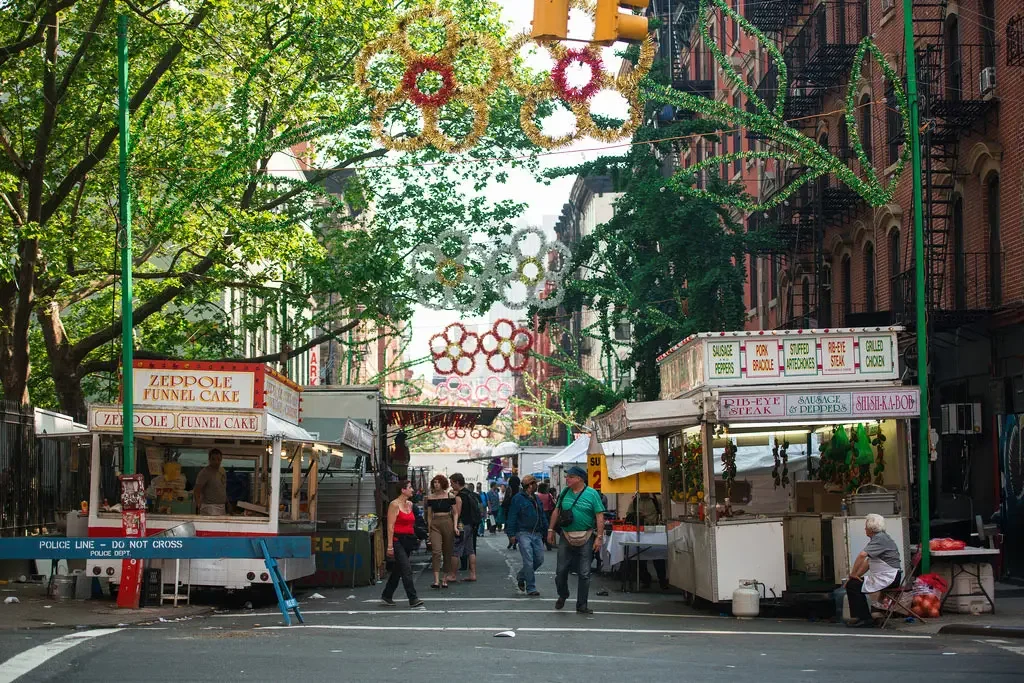
- Streets with everything on them. Restaurants, cafes, bookstores, and independent shops line the avenues and side streets, so daily errands rarely require a long walk.
- Transit. The L train runs along 14th Street, the 6 stops at Astor Place, the F stops at Second Avenue, and Union Square's major subway hub is a short walk west.
- Light on the low-rise blocks. Top-floor apartments and buildings that face wide avenues or the park can capture open light and views over the rooftops.
- Outdoor space. Rear gardens, private terraces in newer condos, and shared roof decks are more common here than the density might suggest.
The East Village is a building-by-building market
This is the single most important thing to understand about the East Village: there is no typical apartment. A walk-up co-op, a prewar elevator unit, and a new boutique condo can sit on the same block and trade in entirely different ways.
Walk-up co-ops come with board approval, building-specific rules, and finances that range from strong to stretched, so reviewing the building's financial statements and recent minutes matters. Floor height in a walk-up carries real weight, both for daily life and for resale. Elevator buildings and condos command a meaningful premium for the convenience they add. Within any building, the line, the exposure, and whether a unit faces the street, the rear yard, or an air shaft can change value considerably. Neighborhood averages tell you little here. The building, the apartment, and the block tell you almost everything.
Off-market in the East Village
As across prime Manhattan, some of the East Village's most desirable homes, especially townhouses, top-floor apartments with outdoor space, and well-run prewar co-ops, change hands without a public listing. In small buildings where owners know one another, word of a sale often travels before a listing does. Access depends on relationships inside the buildings and across the brokerage community. See how off-market deals work in NYC.
Condo, co-op, or townhouse in the East Village
Because the East Village mixes so many building types, the ownership structure shapes the search:
- Co-op buyers. Much of the inventory is co-operative, which means board approval and building-specific rules on financing, subletting, and use. HDFC co-ops add their own restrictions on top. See condo vs. co-op for a pied-a-terre.
- Pied-a-terre and non-resident buyers. Co-ops can restrict pied-a-terre use and entity ownership, so the neighborhood's condominiums are usually the more practical path for a second home or for buyers based abroad. See our guide for foreign and non-resident buyers.
- Townhouse buyers. For those who want a whole building, the side streets hold rowhouses and townhouses, some still divided into units, though few trade in any given year.
Buyers who also want to see loft and prewar stock just to the west can read our NoHo guide.
How to buy in the East Village
- Building knowledge. Because value and approvability vary building to building, the right advisor knows the individual co-ops, their boards, their finances, and their rules, not just the neighborhood.
- Access. With the best townhouses and top-floor apartments often trading quietly, relationships determine what you see.
- Readiness. Have financing or proof of funds, an attorney, and your ownership structure in place, and understand what a board will expect, so you can move when the right home appears.
East Village FAQ
Where are the boundaries of the East Village?
The East Village runs roughly from Houston Street to 14th Street, and from the Bowery and Third Avenue east to the East River. Alphabet City, along Avenues A through D, is its eastern portion. The edges are loosely defined, particularly toward NoHo and the Lower East Side.
What is Alphabet City?
Alphabet City is the eastern part of the East Village, named for Avenues A, B, C, and D. It is known for tenement blocks, community gardens, and quieter residential streets, with Tompkins Square Park between Avenues A and B.
Is the East Village mostly co-ops or condos?
Co-ops make up much of the inventory, many in walk-up and prewar buildings, alongside a growing number of boutique condominiums and a small supply of townhouses. HDFC co-ops, which carry income limits and resale restrictions, are a separate category.
Is the East Village a historic district?
Part of it is. The East Village/Lower East Side Historic District protects a large stretch of tenements and rowhouses, and other individual landmarks are scattered through the neighborhood. Landmark status affects what owners can change on a building's exterior.
Are there elevator buildings in the East Village?
Yes, though walk-ups are the norm. Prewar elevator co-ops and newer boutique condominiums offer elevator access, and they tend to command a premium over comparable walk-up apartments.
Elevated Advisement represents buyers across the East Village's co-op, condo, and townhouse market, including its off-market inventory. To start your search, get in touch.
Want to chat about East Village?
Request a confidential valuation of your residence from Zeve Salman.
Request received
Zeve Salman will be in touch personally with your valuation.
or text Zeve: 917-607-1331