At a glance
Battery Park City recorded 161 condo and co-op sales in the 12 months to September 2026, at a median price of $1,170,000, according to New York City Department of Finance records.
- Median price
- $1,170,000, up 18% on the year before
- Condo or co-op
- Condos $1,057,500, co-ops $1,445,000 (medians)
- Mix of sales
- 77% condo, 23% co-op
- Sales, 12 months
- 161, up 2% on the year before
- Most-traded building
- The Solaire, 58 sales in two years
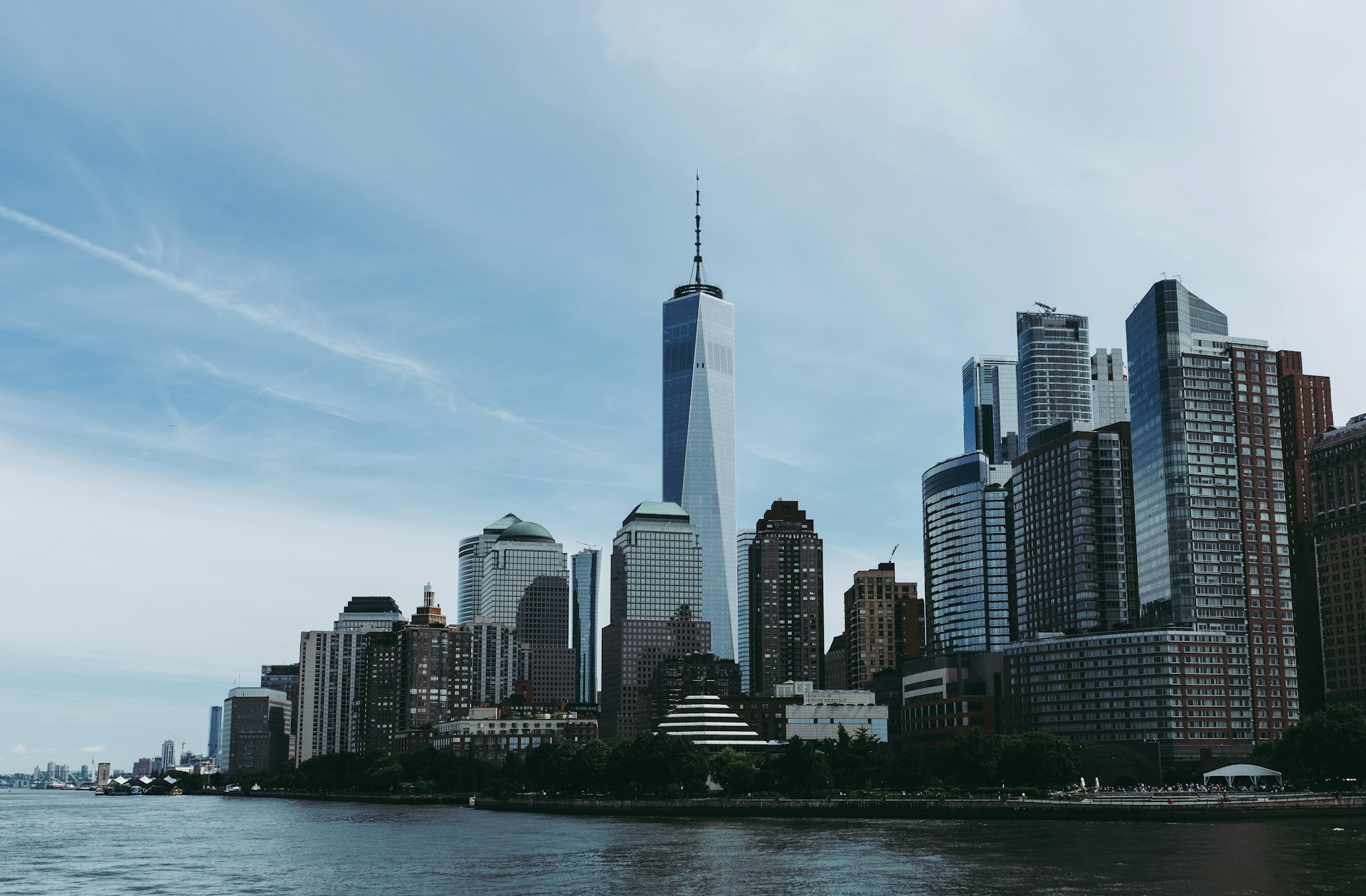
Battery Park City is the most deliberately planned neighborhood in Manhattan. Where most of downtown grew block by block over centuries, this stretch of the Hudson waterfront was built on landfill and laid out from a master plan, with parks, an esplanade, and residential buildings arranged around the river rather than in spite of it. The result is a neighborhood that feels unlike anywhere else on the island: green, open to the sky, and set apart from the street grid, yet a short walk from the towers of the Financial District.
For buyers, the appeal is easy to see and harder to price. The river views, the sunsets, and the sheer amount of maintained park space are obvious from the first visit. What takes longer to understand is the structure underneath. The land here belongs to a public authority, and the residential buildings sit on ground leases, which shapes ownership, carrying costs, and due diligence in ways that buyers coming from other neighborhoods do not always expect. Two apartments with similar views can differ meaningfully once the building, the lease terms, and the exposure are taken into account. This guide explains how the market works, from a team active in it.
Battery Park City sales and prices
City records show 161 apartment sales in Battery Park City in the 12 months to September 2026, at a median price of $1,170,000. The number of sales was up 2% on the year before, and the median price up 18%. Condominiums sold at a median of $1,057,500 and co-ops at $1,445,000.
- 161
- Sales, 12 months
- $1.17M
- Median price
- $1.06M
- Condo median
- $1.45M
- Co-op median
| Year | Sales | Median price |
|---|---|---|
| 2026 to September | 118 | $1,187,500 |
| 2025 | 164 | $987,500 |
| 2024 | 236 | $1,268,750 |
| 2023 | 282 | $1,097,500 |
| 2022 | 269 | $1,250,000 |
| 2021 | 196 | $950,000 |
Source: NYC Department of Finance recorded sales for Battery Park City (tax block 16, which the city files under Tribeca). Condominium and co-op apartment sales only; whole townhouses are not included. Updated weekly as the city publishes new records.
The most active buildings in Battery Park City
Ranked by recorded apartment sales over the latest 24 months on record.
- 1
 The SolaireCo-op58 sales$1.18M median
- 2
 315 North End AvenueCo-op42 sales$1.75M median
- 3
 Liberty CourtCondominium22 sales$723K median
- 4
 The VisionaireCondominium19 sales$2.1M median
- 5
 The RegattaCondominium19 sales$920K median
- 6
 225 Rector PlaceCondominium16 sales$835K median
- 7
 333 Rector PlaceCondominium14 sales$990K median
- 82 South End AvenueCondominium14 sales$660K median
- 92 River TerraceCondominium13 sales$3.61M median
- 10350 Albany StreetCondominium13 sales$765K median
- 1130 Little West StreetCondominium12 sales$1.83M median
- 12380 Rector PlaceCondominium11 sales$1.4M median
Where Battery Park City is
Battery Park City runs along the western edge of Lower Manhattan, west of West Street, from roughly Chambers Street in the north to Battery Place in the south. The Hudson River forms the entire western edge, lined by a continuous waterfront esplanade. To the north, across Chambers Street, is Tribeca. To the east, across West Street, are the World Trade Center site and the Financial District. At the southern end, the neighborhood meets the Battery at the tip of the island.
Locals tend to speak of a north end and a south end, with Brookfield Place and North Cove in the middle. West Street is a wide, busy road, so the pedestrian bridges and crosswalks that connect the neighborhood to the rest of downtown are part of daily life. As with most Manhattan neighborhoods the edges are loosely held, but here the river and West Street make them unusually clear.
Battery Park City's character: parks, river, and a planned calm
Two things define Battery Park City. First, the open space. A large share of the neighborhood is given over to parks and the esplanade: Rockefeller Park and its lawns at the north end, the sculpted rock and planting of Teardrop Park tucked between residential buildings, and a chain of smaller gardens, plazas, and promenades running south along the water. North Cove, a marina set into the esplanade in front of Brookfield Place, adds the sight of boats moored a few steps from home. The parks are carefully maintained, and the setting reads more like a waterfront campus than a typical Manhattan block.
Second, the plan. Because the neighborhood was designed as a whole, the streets are internal and lightly trafficked, the buildings follow coordinated guidelines, and retail is concentrated rather than scattered. Brookfield Place serves as the commercial anchor, with shops, dining, and an indoor winter garden facing the marina, and it links indoors toward the World Trade Center transit hub. The trade-off is that Battery Park City has less of the improvised street life found in older neighborhoods. Many buyers see that as the point.
Battery Park City housing stock: modern condominiums and rentals
Almost everything here was built in the past several decades, so the housing stock is modern by Manhattan standards.
- Waterfront condominiums. Condominium buildings make up most of what comes up for sale, ranging from the earlier towers along the esplanade to later buildings with fuller amenity packages. River-facing lines carry the views the neighborhood is known for.
- Park-facing buildings. Buildings set along Rockefeller Park, Teardrop Park, and the smaller gardens offer green outlooks and a quieter exposure, often with partial river views.
- Rental buildings. A substantial part of the neighborhood's housing is rental, which keeps the for-sale inventory narrower than the skyline suggests.
- Co-operatives. Present but uncommon. Like the condominiums, they sit on ground leases, and their rules vary by building.
Townhouses and prewar buildings, the backbone of many downtown markets, are essentially absent. If you want modern construction, full-service buildings, and water or park views in a planned setting, Battery Park City is one of the most distinctive options in Manhattan.
Why buyers choose Battery Park City
- Water and light. Unobstructed Hudson River exposures, open western light, and sunsets over the river and the harbor are the neighborhood's signature.
- Parks at the door. Rockefeller Park, Teardrop Park, the esplanade, and the gardens to the south put lawns, gardens, and waterfront paths steps from the lobby.
- Quiet streets. Internal streets with little through traffic, set apart from West Street, give the neighborhood a calm that is rare downtown.
- Transit and access. The World Trade Center and Fulton Street transit hubs, the Chambers Street subway station, PATH trains to New Jersey, and ferry service from the waterfront are all within walking distance.
- Modern buildings. Contemporary construction means elevators, central systems, and amenity packages that older stock often cannot offer.
- The waterfront route. The esplanade connects north into Hudson River Park, so a walk or run along the river can continue well up the West Side.
Battery Park City is a ground lease market, where the documents matter
This is the most important thing to understand about Battery Park City: you can own your apartment, but the building does not own the land under it. The land is owned by the Battery Park City Authority, a New York State public benefit corporation that oversees the neighborhood's development and its parks. Residential buildings sit on long-term ground leases from the Authority.
In practice, buying a condominium here still means owning your unit and a share of the common elements, and buying into a co-op still means owning shares in the corporation. What differs is that the building's rights to the land are defined by the lease, and the building's obligations under it, including ground rent and related charges, flow through to owners in common charges or maintenance. Those obligations, and how they change over time, can affect monthly costs, financing, and resale value. Terms differ from building to building, so the lease is something to read carefully rather than assume.
Ask your attorney to review the ground lease and any related agreements as part of due diligence, alongside the offering plan, the building's financials, and recent board minutes. Lenders will look at the lease too, so it is worth knowing early how a given building is viewed. Beyond the lease, value here is driven by exposure. Within a single building, a river-facing line and an inward-facing line can trade very differently, and floor height, view protection, and condition all matter.
Off-market in Battery Park City
As across prime Manhattan, some of Battery Park City's most sought-after homes, especially the best river-facing lines, change hands without a public listing. Access depends on knowing the buildings and the brokers who work in them. See how off-market deals work in NYC.
Condo or co-op in Battery Park City
Because the for-sale market is mostly condominium, the ownership choice here usually comes down to which building, rather than which structure:
- Condo buyers. Condominiums offer the most flexibility on use, leasing, and resale, but each sits on a ground lease, so lease review belongs in every purchase. See condo vs. co-op for a pied-a-terre.
- Co-op buyers. The neighborhood's co-ops add a board approval process and building-specific rules on top of the lease structure, so it is worth confirming both before you commit.
- Pied-a-terre and non-resident buyers. Condominiums are generally the easier path for a second home or for buyers based outside the United States, though the lease and the building's own rules still apply. See our guide for foreign and non-resident buyers.
Buyers weighing Battery Park City against nearby neighborhoods with more prewar and loft stock can compare our guides to Tribeca and the Financial District.
How to buy in Battery Park City
- Building and lease knowledge. Because value and carrying costs are tied to individual buildings and their ground leases, the right advisor knows each building's history, finances, and lease position, not just the views.
- Access. With the best river-facing lines often trading quietly, relationships determine what you see.
- Readiness. Have financing or proof of funds, an attorney experienced with ground lease buildings, and your ownership structure in place, so you can move when the right apartment appears.
Battery Park City FAQ
Where are the boundaries of Battery Park City?
Battery Park City runs along the Hudson River west of West Street, from roughly Chambers Street in the north to Battery Place in the south. Tribeca lies to the north, the Financial District to the east, and the Battery at the southern tip.
Who owns the land in Battery Park City?
The land is owned by the Battery Park City Authority, a New York State public benefit corporation. Residential buildings sit on ground leases from the Authority, so owners hold their apartments while the building's rights to the land come from the lease.
Does the ground lease matter when buying an apartment?
Yes. The building's obligations under the ground lease flow through to owners in monthly charges, and the lease terms can affect financing and resale. Ask your attorney to review the ground lease and related documents as part of due diligence, since terms vary by building.
Is Battery Park City mostly condos or co-ops?
The for-sale market is mostly condominium, with a smaller number of co-ops and a large share of rental buildings. Almost all of the housing is modern construction rather than prewar.
What parks are in Battery Park City?
Rockefeller Park and Teardrop Park anchor the north end, a waterfront esplanade runs the length of the neighborhood, and a series of smaller gardens and plazas continue south toward the Battery. North Cove marina sits along the esplanade in front of Brookfield Place.
Elevated Advisement represents buyers across Battery Park City's waterfront condominium and co-op market, including its off-market river-facing inventory. To start your search, get in touch.
Want to chat about Battery Park City?
Request a confidential valuation of your residence from Zeve Salman.
Request received
Zeve Salman will be in touch personally with your valuation.
or text Zeve: 917-607-1331