
How Long It Takes to Sell an Apartment in Manhattan: Days on Market in Tribeca, SoHo and the West Village
This guide covers how long it takes to sell an apartment in Manhattan right now, with a focus on Tribeca, SoHo and the West Village. We pull together the most recent published data on days on market and negotiability, broken out by neighborhood where a report does so and by price band where it does not, and we label each figure as neighborhood-specific, Downtown-wide or Manhattan-wide so you know exactly what you are looking at. We then walk through what happens after the contract is signed, because the calendar a seller actually lives with runs from launch day to closing day, and condos and co-ops follow different paths. We will update the numbers here as new monthly and quarterly reports are released.
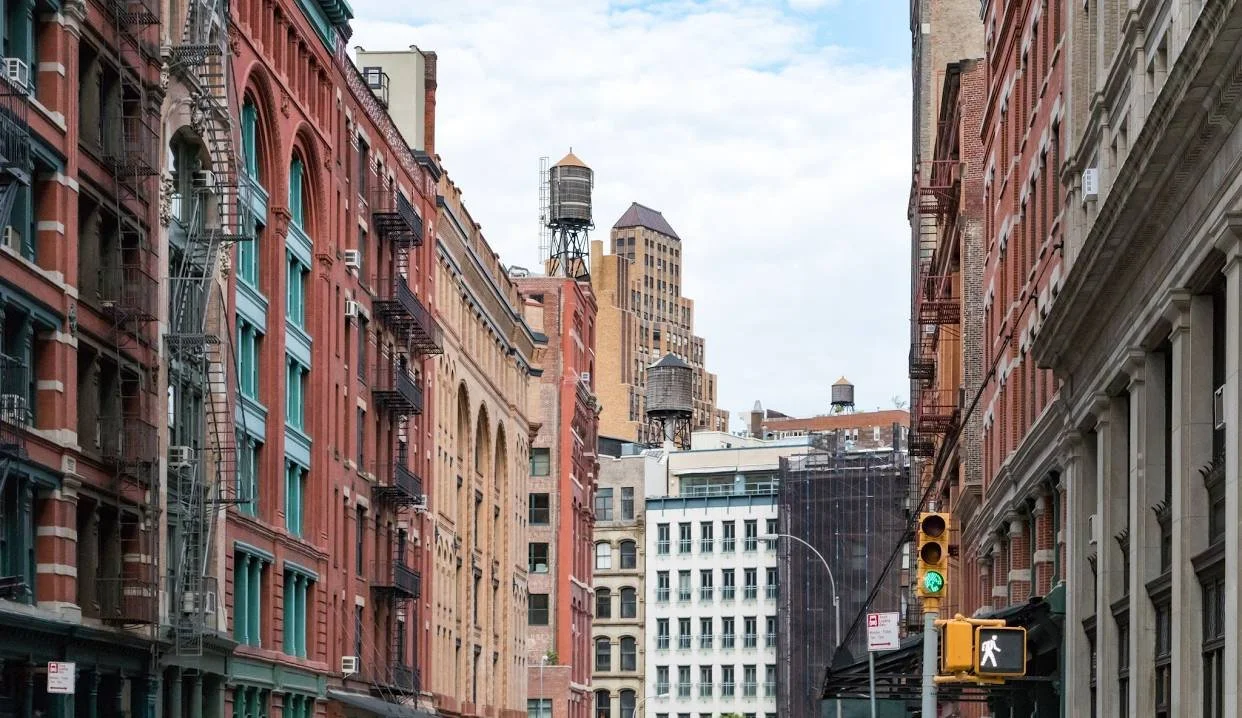
Days on Market in Downtown Manhattan at a Glance
The table below gathers the latest figures we could verify. Each firm measures time on market a little differently, so compare rows from the same source before comparing across sources.
| Market | Time on market | Negotiability | Source and period | Scope |
|---|---|---|---|---|
| Tribeca, SoHo and the West Village | No Q3 2026 neighborhood figure in the reports we use | Not reported | Use the Manhattan rows as the benchmark | Neighborhood |
| Manhattan, all homes | 102 days median, up 11 days year over year | 21.1% of NYC homes sold above latest ask (citywide) | StreetEasy, September 2026 | Manhattan-wide |
| Manhattan, all listings | 65 days in early August, down 3% year over year (2026 peak of 94 days in late March) | Not reported | UrbanDigs 60-day moving average, via Forbes, August 2026 | Manhattan-wide |
| Manhattan resales sold in under 30 days | Under 30 days | Sold at asking price (median) | UrbanDigs, via Forbes, September 2026 | Manhattan-wide |
| Manhattan resales sold in 60 to 89 days | 60 to 89 days | Median discount 4.6% off original ask | UrbanDigs, via Forbes, September 2026 | Manhattan-wide |
| Manhattan resales sold in 120 days or more | 120 days or more | Median discount 9.3% off original ask | UrbanDigs, via Forbes, September 2026 | Manhattan-wide |
| Manhattan luxury resale condos | 78 days median | Not reported | StreetEasy, June 2026 | Manhattan-wide |
| Manhattan, $4M and up, week of August 24 to 30 | Typical contract listed more than two years | 16% off original ask | Olshan Luxury Market Report, via Hoodline | Manhattan-wide |
| Manhattan, $4M and up, week of August 31 to September 6 | Typical contract listed nearly a year | 6% off original ask | Olshan Luxury Market Report, via Hoodline | Manhattan-wide |
How to read it: StreetEasy reports the median days on market for Manhattan homes in its monthly market report. UrbanDigs' days on market figure is a 60-day moving average, and its negotiability figures come from an analysis of nearly 200,000 Manhattan and Brooklyn resales since 2006, measured as the median discount from the original asking price, as reported by UrbanDigs co-founder John Walkup in Forbes. Olshan's weekly figures cover contracts at $4 million and up and also measure from the original ask, so they capture every price reduction along the way.
What the Q3 2026 Reports Say About Pace
According to Jonathan Miller's third quarter 2026 Manhattan report with The Real Deal, as reported by Brick Underground, deals rose 8% from a year earlier while listings fell 10.7%, the fourth year-over-year decline, and luxury listings fell 14.1%. Hoodline's coverage of the same report noted that luxury deals rose 7%, with the biggest jump in activity in the $2 million to $5 million range. Fewer listings and more deals is the backdrop for every days on market figure below.
On pace itself, UrbanDigs' 60-day moving average showed Manhattan listings selling in 65 days in early August 2026, down from a 2026 peak of 94 days in late March and down 3% from a year earlier, as John Walkup reported in Forbes. StreetEasy's September 2026 market report put the Manhattan median at 102 days on market, up 11 days from a year earlier, with 7,957 homes for sale, down 11.7%.
None of the Q3 2026 reports we use publishes a days on market figure for Tribeca, SoHo or the West Village individually, so the Manhattan figures are the benchmark. StreetEasy's September 2026 report does show Tribeca supply building into the fall: Tribeca had 81 new listings in September, up 30.7% from a year earlier, at a median asking price of $5.1 million, one of the highest counts of new listings of any NYC neighborhood.
For our full read on the quarter, including why $5 million and up keeps selling, see our Q3 2026 Manhattan market analysis.
Time on Market by Price Band
Price band matters as much as neighborhood. None of the Q3 2026 reports we use publishes days on market by price band, but they do show where demand is concentrated, and demand is what drives pace. These figures are Manhattan-wide:
$2M to $5M: the biggest jump in luxury deal activity in the third quarter, according to Jonathan Miller's report with The Real Deal
$3M to $5M: condo and co-op deals up more than 30%, according to Compass, the strongest gains of any range
$5M to $10M: condo sales up by double digits, according to Compass
$4M and up: in the weekly Olshan reports for late August and early September, the typical home in contract had been listed for nearly a year to more than two years, depending on the week
Reading the $3M to $5M and $5M and Up Bands
The $3M to $5M band is where demand is strongest. Brick Underground's third quarter roundup reported that Compass counted deals up more than 30% for condos and co-ops in that range, and Jonathan Miller's report with The Real Deal placed the biggest jump in luxury activity between $2 million and $5 million.
Above $5 million, the picture is more mixed week to week. Compass reported that condo sales from $5 million to $10 million rose by double digits in the third quarter, while Jonathan Miller's report showed Manhattan luxury listings down 14.1% from a year earlier, which leaves sellers at the top of the market with fewer competing listings. The weekly Olshan figures below show how much marketing time varies from one week to the next at $4 million and up.
StreetEasy's June 2026 market report gives a useful split by product at the top of the market. It reported a median of 78 days on market for luxury resale condos, 103 days for luxury co-ops that went under contract, and 57 days for luxury townhouses, against a Manhattan median of 64 days. The same report counted 83 luxury resale condo listings in Tribeca, the second most of any neighborhood, which tells a Tribeca seller how much competition sits in the same tier.
Negotiability: How Far Below Asking Homes Are Selling
UrbanDigs research gives the clearest Manhattan read on negotiability. In an analysis of nearly 200,000 Manhattan and Brooklyn resales since 2006, reported by UrbanDigs co-founder John Walkup in Forbes in September 2026, 73% of sales with at least 14 days on market closed below their original asking price. Manhattan resales that sold in less than 30 days went for their asking price, while the median discount reached 4.6% at 60 to 89 days and 9.3% at 120 days or more. StreetEasy's September 2026 report adds that 21.1% of NYC homes sold above their latest asking price. The UrbanDigs figures are Manhattan-wide and the StreetEasy figure is citywide.
At $4 million and up, the weekly Olshan Luxury Market Report is the most granular read, and the numbers swing week to week. As Hoodline reported, for the week of August 24 to 30, 2026, Olshan counted 24 contracts at $4 million and up, and the typical home in contract had been listed for more than two years and was discounted 16% from its original asking price. For the week of August 31 to September 6, Olshan counted 13 contracts, with the typical home on the market for nearly a year and discounted 6% from its original ask.
Those Olshan figures measure from the original asking price, so they capture every price reduction along the way. The lesson for sellers is that the discount is largely a function of time. Homes that launch at the right number tend to trade close to it, while homes that sit tend to give up more. We track the weekly figures in our Luxury Market Watch.
What Shortens Time on Market
The fastest sales Downtown share three things, and all of them are within a seller's control.
Pricing: Price against recent closed and contract comparables in the same building or block, not against the most optimistic active listing. UrbanDigs data shows Manhattan resales that sold within 30 days went for their asking price, while those that sat 120 days or more gave up a median 9.3% of their original ask.
Presentation: Professional photography, an accurate floor plan, and a home that is clean, repaired and edited before the first showing. Buyers at these price points compare carefully, and the first two weeks set the tone.
Launch: Have the building documents, financials and disclosure items ready on day one so a buyer can move from offer to contract without delay. Decide in advance whether to test the market quietly or launch publicly; our off-market or public playbook lays out that choice.
Timing still plays a role, but it plays a smaller one than pricing. For the month-by-month view, including when buyer activity peaks and when listings take longer, see our season-by-season guide to selling Downtown.
After the Contract: The Condo Timeline
Days on market ends when the contract is signed, but the sale is not finished until closing. StreetEasy's guide to the period between offer and closing notes that drafting and negotiating the contract of sale can take one to two weeks, and that a financed buyer's mortgage commitment can take 30 to 45 days.
In a condo, the main building step is the board's right of first refusal, which StreetEasy says can take between a few days and a month to be waived. StreetEasy also suggests planning for about two months from accepted offer to closing on a financed purchase. A separate StreetEasy guide to closing notes that an all-cash buyer may be able to close in as little as 30 days, while a financed buyer's mortgage commitment alone can take around 30 to 45 days.
New development is a different calendar. StreetEasy notes that buyers may sign contracts two to three years before closings take place, and longer if construction runs late.
After the Contract: The Co-op Timeline and the New Law
Co-ops add a board application, an interview and a decision. StreetEasy says this process can take anywhere from a few weeks to a few months, which is why co-op sellers should plan for a longer gap between contract and closing than condo sellers.
New York City's co-op application timeline law now puts a clock on that stage. According to a client alert from the law firm Cozen O'Connor, the City Council overrode the mayoral veto of Int. No. 1120-B on January 29, 2026, with the law taking effect 180 days later, in late July 2026. For covered co-ops of more than 10 units, the board must acknowledge an application within 15 days and state whether it is complete, and must issue a decision within 45 days of a complete application. Boards may take one 14-day extension on notice and an additional 14 days if they request more information, may toll the clock in July and August only under a formally adopted recess policy, and face penalties of $1,000, $1,500 and then $2,000 per violation, enforced by HPD.
For a seller, that means the co-op calendar is more predictable than it used to be, provided the buyer's package is complete when it is submitted. Our guide to the co-op application timeline law covers the details, and our co-op or condo decision framework explains how the two forms differ for buyers.
Putting the Whole Calendar Together
A practical way to plan is to add the stages. Start with preparation before launch, then use the days on market figure for your neighborhood and price band from the table above, then add the post-contract period for your building type. In a Downtown condo priced in a fast-moving band, the market data suggests contract can come within roughly three months of launch, followed by roughly one to three months to closing depending on financing. A co-op adds the board stage, which the new law now bounds.
We update this page as UrbanDigs, StreetEasy, Olshan, Compass, Jonathan Miller and our other sources release new data. If you are planning a sale in Tribeca, SoHo or the West Village and want a calendar built for your specific home, building and price point, contact Elevated and we will walk you through it.
Work with Elevated
We have helped clients buy and sell residences in nearly every notable building throughout New York City, including 443 Greenwich, 70 Vestry, 56 Leonard, 111 Murray, 71 Laight, and 80 Clarkson, among many others. We are also proud to have represented the most expensive penthouse ever sold in Downtown Manhattan, a $60 million residence at 150 Charles Street. More than half of our transactions take place off-market, as many of the best opportunities never reach a public listing site. Talk to us before you bid. We can help you understand not only what to buy, but how a building actually operates, how it is perceived in the market, and what you should know before making an offer.
Elevated Advisement
Considering a move?
Tell us what you are looking for and we will come back to you privately, including off-market options that never reach the public listings.
Message sent
Thanks for reaching out. We will be in touch personally.