Manhattan New Development Inventory 2026: Pricing and Absorption for Condos Launching in 2027
This article looks at where Manhattan's new development condo market stands heading into 2027: how much sponsor inventory is left, what the fall 2026 launches are asking, how quickly units are selling at different price points, where sponsors still negotiate, and what all of it means for developers planning a 2027 launch and for buyers deciding between a sponsor unit and a resale.
Fall 2026 Launches: The New Price Floor
The headline is supply. According to Marketproof data reported by The Real Deal, Manhattan had just 2,800 new development condos available at the end of August 2026, the lowest total since 2014. Jonathan Miller reported that new development listings fell nearly 40 percent year over year in the third quarter. Demand has not gone away. It has moved to the resale market and to the handful of new buildings in locations buyers actually want.
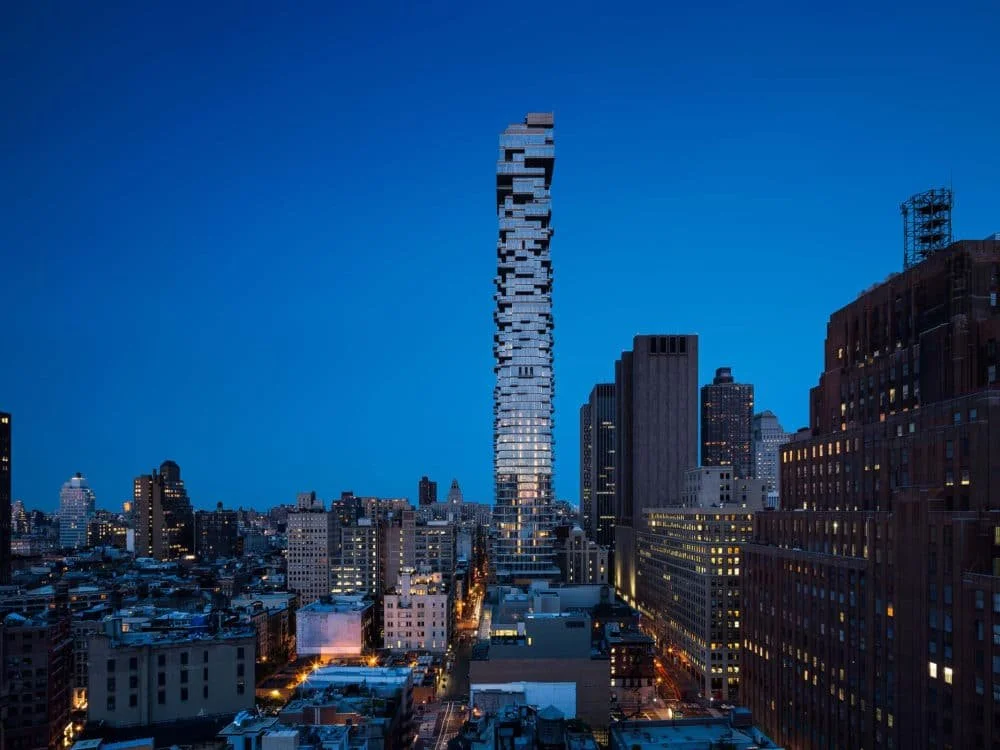
Five Manhattan buildings opening sales this fall show how far entry pricing has moved. Mansion Global described their starting prices as the level where penthouses used to begin. The table below lists each launch with the opening price reported at the time of launch.
| Building | Neighborhood | Units | Opening price |
|---|---|---|---|
| 44 West 8th Street | Greenwich Village | 5 | From $9.75M |
| 262 Fifth Avenue | NoMad | 26 | $7.5M to $18M |
| The Greenwich Spire, 11 West 13th Street | Greenwich Village | 34 | From $4.5M |
| 101 Franklin | Tribeca | 72 | $4M to $20M (penthouses on request) |
| 175 East 82nd Street | Upper East Side | 73 | About $3M to $40M |
Two points stand out. First, most of these are boutique or mid-sized buildings, and several start above $4 million. Second, the range at the top is wide: 175 East 82nd Street runs to roughly $40 million, and 101 Franklin lists full-floor penthouse pricing on request.
How Low Is Manhattan New Development Inventory?
Marketproof's count of 2,800 available new development units at the end of August is the smallest since 2014, which makes it a 12-year low. The same reporting noted that over the past year sponsor sales outpaced new unit introductions by roughly two to one. In other words, buyers have been absorbing product faster than developers have been replacing it.
The number also overstates how much good inventory exists. A large share of what remains sits in buildings that have been on the market for years, including One Wall Street, 125 Greenwich, the Waldorf Astoria conversion and Malabar Residences on 57th Street. Compass Development Marketing's Dan Parker described much of the remaining supply as "stubborn inventory." For a buyer who wants a new building in Tribeca, the West Village or along the Fifth and Madison corridor, the real choice set is much smaller than 2,800 units.
Miller's third quarter data points the same way. Listing inventory across Manhattan fell year over year for the fourth time, with the largest declines in luxury and new development. Our Q3 2026 Manhattan market breakdown covers how that shortage played out above $5 million.
Absorption: Fewer Contracts Because There Is Less to Buy
New development contract counts fell this year, and it is easy to misread that as weak demand. Marketproof data showed Manhattan new development contracts down 26 percent from April through September compared with the same period last year, while resale condo contracts rose 12 percent over the same stretch. Buyers kept signing. They signed for resales because there were fewer sponsor units worth buying.
Where well-located product exists, it has sold quickly. Legion Investment Group and Nahla Capital's 1122 Madison was reported nearly sold out in less than a year, including a deal on a penthouse asking $89 million. The Village West at 525 Sixth Avenue has sold all 68 of its units according to the development's website, and 220 East Ninth Street sold out without ever opening a sales gallery.
Pricing has held up as volume dropped. In Miller's third quarter figures as reported by The Real Deal, the new development median sale price rose 14 percent year over year to just under $2 million.
Absorption by Price Band
Marketproof's monthly new development reports track contracts at $4 million and above across Manhattan and Brooklyn. That tier stayed active through the first half of 2026 even as overall counts slipped:
January 2026: 34 contracts at $4M and above, compared with 29 a year earlier.
February 2026: 54 contracts at $4M and above.
March 2026: 45 contracts at $4M and above, compared with 53 a year earlier.
April 2026: 45 contracts at $4M and above, compared with 35 a year earlier (7 in Brooklyn).
May 2026: 40 contracts at $4M and above, compared with 50 a year earlier (7 in Brooklyn); 12 were at $10M or more and only 1 exceeded $20M.
What the Price Bands Tell Sponsors
Those May figures are worth reading closely. Contracts at $10 million and up made up a meaningful share of the $4 million plus tier, while deals above $20 million were rare. Across the wider market, Miller reported the strongest annual sales growth between $2 million and $5 million. Taken together, the deepest pool of buyers sits between the low millions and roughly $10 million, with a thinner, more selective group above $20 million.
Manhattan's median new development price per square foot in Marketproof's monthly reports was $2,035 in January 2026 and $2,144 in March 2026. Those are borough-wide medians that mix Midtown, downtown and uptown stock, so a Tribeca or West Village launch should be benchmarked against its own neighborhood comps rather than the citywide number.
The fall launch list is skewed toward that core band. 101 Franklin starts at $4 million, the Greenwich Spire at $4.5 million and 262 Fifth Avenue at $7.5 million. Our look at Tribeca new developments buyers should watch covers the downtown pipeline in more detail.
Where Sponsors Still Offer Concessions
Concessions in this market follow the inventory, not the calendar. Fast-selling boutique launches in prime locations have little reason to give anything away. The buildings carrying the most unsold units, the long-marketed towers in the Financial District and Midtown named above, are where buyers have the most room to negotiate.
In our experience with Manhattan sponsor sales, the common forms of concession are rarely a cut to the listed price, because a public price reduction resets expectations for every remaining unit. More often the sponsor agrees to pay its own transfer taxes, contributes toward closing costs or the working capital fund, or includes storage or parking. Each building handles this differently, and the terms belong in the contract, not in a verbal promise.
For buyers, the practical step is to price the full cost of a sponsor purchase before comparing it with a resale. Our NYC buyer closing cost calculator shows how sponsor transfer taxes change the total.
What This Means for Sponsors Planning 2027 Launches
With little competing product in prime neighborhoods, sponsors launching in 2027 have real pricing power. That power is specific to location and product quality, and the market has been clear about where it ends: the oversupplied, long-marketed buildings are still working through inventory.
Projects reaching the market next year will include ground-up towers and conversions. Our piece on office to residential conversion in NYC looks at where more of that future supply is coming from.
Price the opening release to sell, then step up. The fall 2026 launches set a high bar, and early absorption at the opening price builds the record that supports increases on later floors.
Build the unit mix around the deepest demand. Contract data points to strength from the low millions up to about $10 million, with a narrower audience above $20 million.
Benchmark against resales, not only other new buildings. Resale condo contracts rose while new development contracts fell, so the resale down the block is the real competition.
Plan an off-market or pre-launch phase. Several of this year's best performers sold quietly or before a sales gallery opened, which shows how much demand exists for discreet early access.
Keep concessions off the price sheet. If terms are needed, use transfer tax, closing cost or storage credits rather than public price cuts.
Sponsor Unit or Resale: How Buyers Should Decide
For buyers, the low inventory changes the trade-off. A sponsor unit offers new systems, current layouts and amenities, and often a delivery date a year or more away; 175 East 82nd Street anticipates move-ins starting in fall 2027, and 101 Franklin is estimated to complete in 2028. A resale offers immediate occupancy, an operating history and, usually, lower transaction costs because the seller pays the transfer taxes.
Neither is the wrong choice. The right one depends on timing, how much the buyer values new construction, and the all-in cost. Buyers comparing options downtown or uptown can browse current buildings by neighborhood in Tribeca and the Upper East Side, and follow weekly data in our NYC Luxury Market Watch.
Elevated advises sponsors on launch strategy and buyers on sponsor and resale purchases across Tribeca, the West Village, SoHo and the Upper East Side, including off-market opportunities. Contact Eric Brown and the Elevated team to talk through a 2027 launch or a purchase.
Work with Elevated
We have helped clients buy and sell residences in nearly every notable building throughout New York City, including 443 Greenwich, 70 Vestry, 56 Leonard, 111 Murray, 71 Laight, and 80 Clarkson, among many others. We are also proud to have represented the most expensive penthouse ever sold in Downtown Manhattan, a $60 million residence at 150 Charles Street. More than half of our transactions take place off-market, as many of the best opportunities never reach a public listing site. Talk to us before you bid. We can help you understand not only what to buy, but how a building actually operates, how it is perceived in the market, and what you should know before making an offer.
Elevated Advisement
Considering a move?
Tell us what you are looking for and we will come back to you privately, including off-market options that never reach the public listings.
Message sent
Thanks for reaching out. We will be in touch personally.